From #ThinkCulture to #RethinkCulture
Caveat: I wrote this post back in May 2022, with the intention to share on the EuropeanaPro blog. It never made it there but as it is still relevant, I am sharing it here.
Can we, as digital heritage professionals, expand/shift the debates around race, inclusion, and diversity to find practical ways to support diversity in the workforce and also capture community perceptions in the digital representations of culture?
We have seen growing awareness and calls for action on a wide range of aspects around diversity and inclusiveness in practically all human life sectors. While for many sectors, a pressing current issue is how to make sure people of different backgrounds have equal opportunities to participate and have a real say and how to eradicate structural racism, the digital cultural domain has its special role and remit beyond the workforce diversity and inclusion. Digital representations of cultural heritage artefacts inevitably include a description (captured in different metadata elements and referred in thesauri, vocabularies, ontologies and other knowledge organisation tools). Description and knowledge structures are inevitably based on assessment and also interpretation.
A much-loved example which illustrates a different system of knowledge in teaching classification is the grouping of objects from the surrounding worlds in the Dyirbal language based on George Lakoff’s “Women, Fire and dangerous things”. It is also a great illustration on the complexity of capturing and making sense of different views on the world.
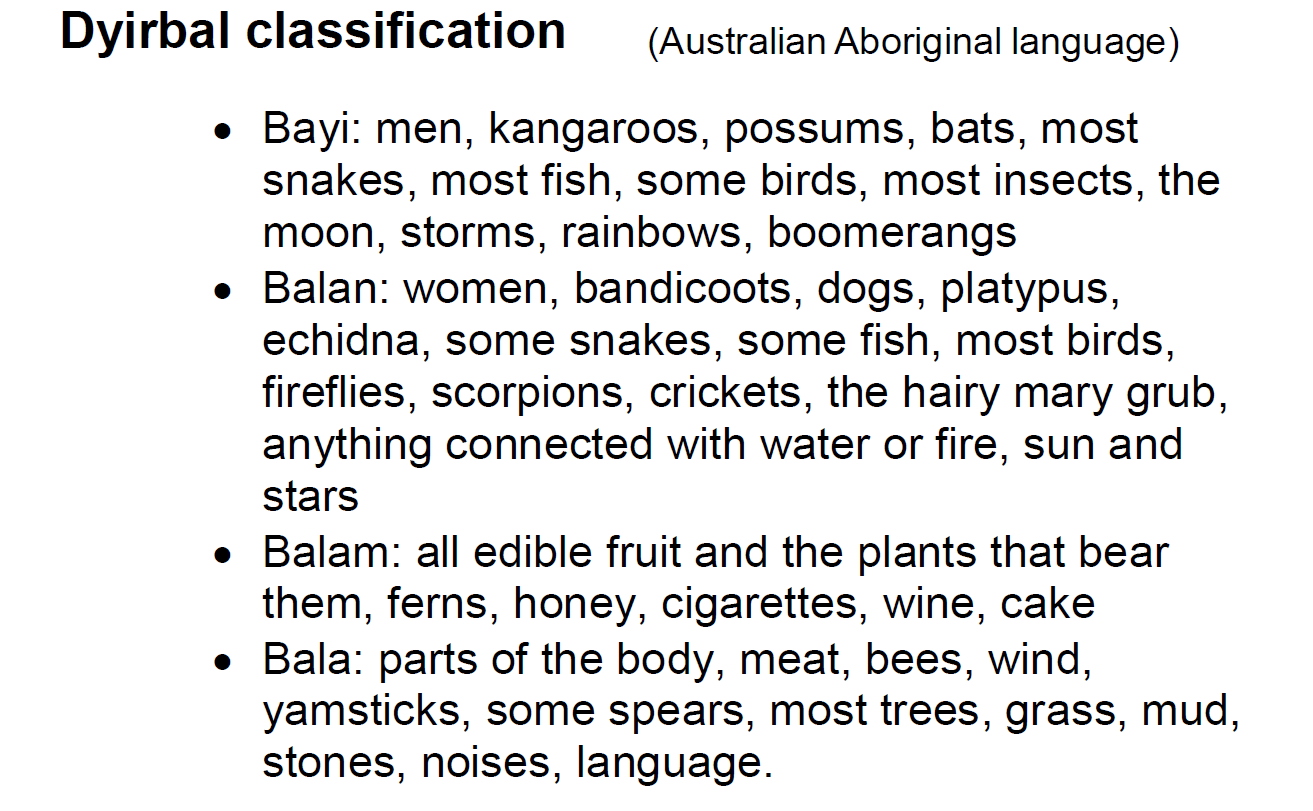
Do we, as digital cultural heritage professionals, have appropriate tools to capture different views on artefacts? Can we integrate different systems of knowledge in the digital collections? What instruments of the trade we have or need – which would allow us to present multiple perspectives on objects which bear different meanings for different communities? One even more specific question is can we decolonise digital collections using digital instruments?
Yes, we definitely have what to build on – here are just some examples:
Participatory approaches
There was a huge shift in adding ‘lay’-persons views on historical and cultural objects to the professional interpretation and description which are delivered by community tagging, building folksonomies and other participatory approaches.
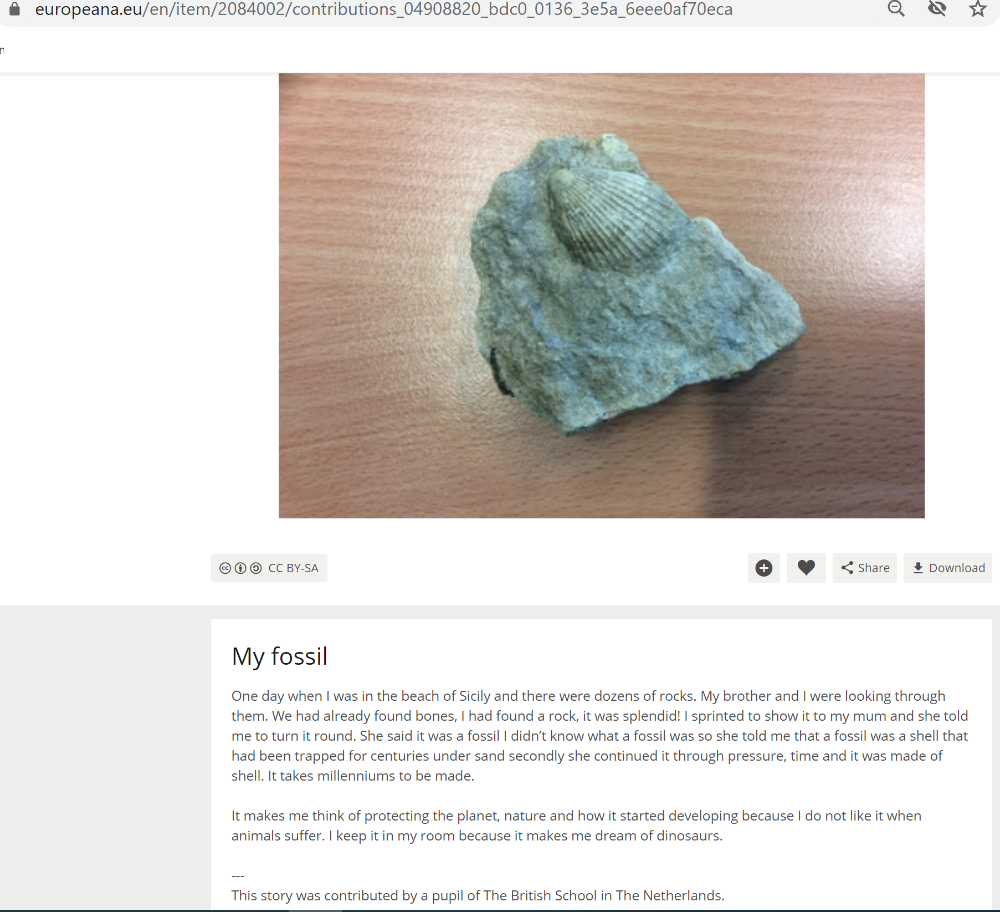
Europeana experimented with collecting family and personal stories from users; here is a lovely description of a fossil by a pupil from a school in the Netherlands. While it lacks the proper classification one would discover in the professionally prepared records, it captures the emotions around the personal discovery of a fossil. Europeana has both venues of having professional descriptions and capturing personal perceptions, which can serve as an inspiration for developing a future experimental space where professionally described objects are enriched with personal or community reflections.
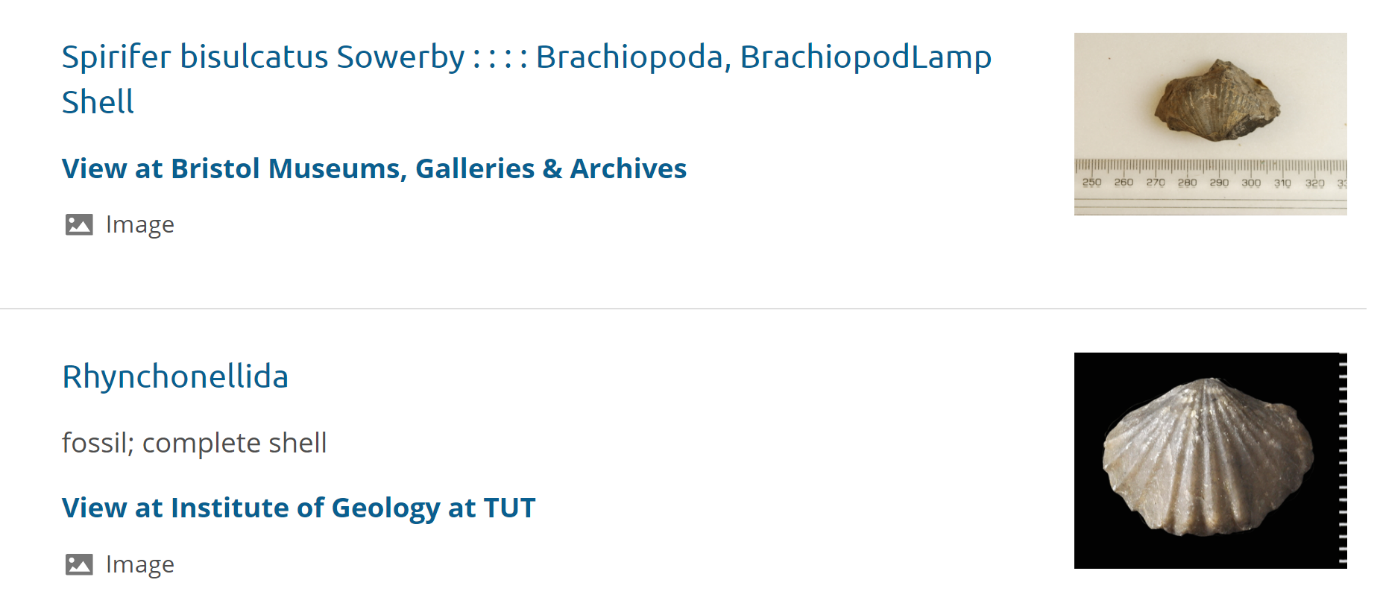
As a comparison, here are some of the professionally described fossils of shells in Europeana:
Semantic graphs
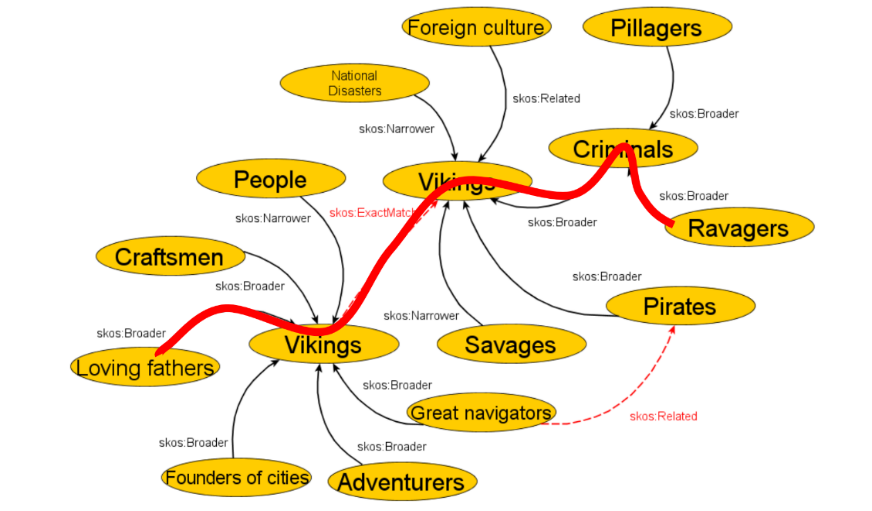
Some ten years ago we were looking at this example on the perception of Vikings (I stored the image which was available on the CARARE project website but seemed to have disappeared since) as conquerors (the Irish vocabulary on Vikings) compared to the perception of their ancestors (the Norwegian vocabulary).
 |  |
| The Irish vocabulary | The Norwegian vocabulary |
We have the tools to combine different points of view in a semantic graph – here is how the Viking one would look like. Having the tools does not mean we have plenty of knowledge structures capturing different perceptions – this work can be definitely expanded.
‘Smart replicas’ and multisensory experiences
In the last years there is interesting ongoing research on adding interpretations layers from different points of view within the exploration of museum collections. This includes work on creating virtual or smart replicas – for example the project meSch experimented with enhancing exhibitions with smart replicas which allowed the visitors to follow different perceptions around the same historical events. While these were used for exhibition experiences, and interesting aspect was the use of smart replicas after an exhibition to stimulate continuing engagement. It would be worthwhile exploring how these technologies can be used in the larger context of digital cultural heritage collections.
The Importance of Voices from the Global South
While this post does not focus on the institutional aspects, I wanted to add one line of work I consider particularly sensitive to support more inclusivity and diversity, and this is the systematic work to bridge the digital divide between the Global North and the Global South.
In August 2019 I organised the first (and so far only First Sub-Saharan Workshop on Digital Innovation Labs in Cultural Heritage Institutions which in those pre-covid times was hosted by the Livingstone Museum in Livingstone, Zambia. After the workshop, we put together a reflective piece about the digital divide, starting with this paragraph: “Can you recall seeing an interesting digital cultural heritage object from Zambia lately? If you search the Europeana Collections portal, you will find some 2500 digital objects coming from European heritage institutions. Alongside these items, you can enjoy a wood pigeon (Turtur chalcospilos) birdsong recorded in Tongabezi, near Victoria Falls, Zambia which resides in the collection of Naturalis Biodiversity Centre in the Netherlands. While digitisation efforts of various Zambian institutes can be traced back to at least 2002, in reality, most of the digital content on the diverse Zambian heritage can be discovered in digital collections from the Global North, and one can expect that the descriptions of these objects are done using the best of the knowledge of the curators taking care of objects which are part of the Global North collections.
One way to offer content that includes different points of view is to involve local curators in the description of objects and adding the layers, which would allow capturing better the points of views coming from the multiple local communities.
The second line of work would be to find more ways to address the digital divide. The UNESCO survey, which captured the shift in the museum delivery in the digital domain when the COVID-19 pandemic started, showed clearly that the Global South was not prepared to make a smooth transition to a fully digital modus operandi during the pandemic. We can’t neglect this because the lack of capacity to deliver digital services in these times means lack of any access to the local collections. While the digital divide is usually perceived as having negative consequences to the countries experiencing the divide, it has a global harmful effect in the digital cultural domain because the Global South will be almost invisible to anyone in the Global North who wants to explore its cultural and historical heritage.
Some years ago, Europeana was using the slogan “Think Culture”. The time had come to rethink culture and expand the digital representations with rich contextual information. This definitely would require more work and finding new ways of engaging the global professional community. I hope that as a professional community, we will succeed in channeling our energy and expertise in these directions.

 Milena Dobreva